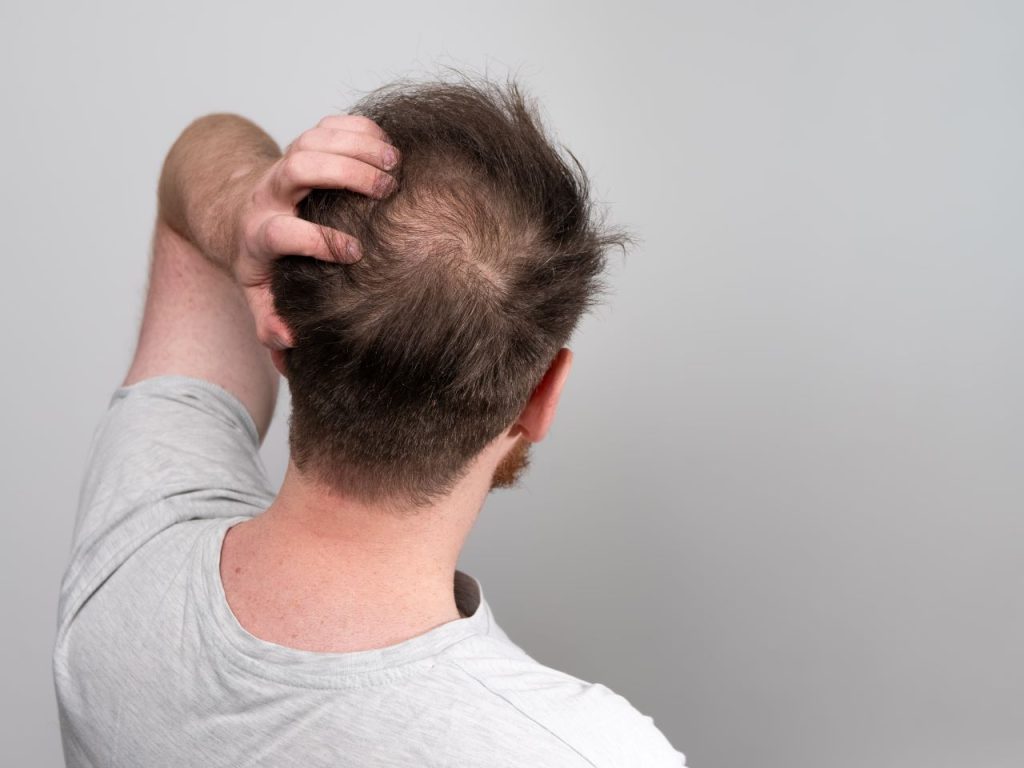
With male pattern baldness accounting for 95% of all hair loss in men, it’s safe to say it’s a widespread issue that many people need to take note of. Known officially as androgenic alopecia, male pattern baldness is a genetic condition that causes the male hormone testosterone to be converted into DHT.
Whilst the presence of DHT is linked to several benefits, including the maintenance of muscle mass and the promotion of sexual health and fertility, too much DHT can have a negative impact. Healthline explains more about the effect Dihydrotestosterone (DHT) has on the hair:
“High levels of androgens, including DHT, can shrink your hair follicles as well as shorten this cycle, causing hair to grow out looking thinner and more brittle, as well as fall out faster. DHT can also make it take longer for your follicles to grow new hairs once old hairs fall out. Some people are more susceptible to these effects of DHT on scalp hair based on variations in their androgen receptor (AR) gene.”
As with any type of hair loss, knowing how to spot the signs of male pattern baldness early can help you access the treatment and preventative methods you need to slow its progression. In this blog post, we reveal the five main signs and symptoms that male pattern baldness may become an issue for you in the future.
Taking a look at your family tree on both your mum’s and your dad’s side could be an indication that you are at risk of developing male pattern baldness.
Whilst one or two bald or receding relatives isn’t a surefire sign that male pattern baldness will become an issue for you. If a number of family members on both sides suffer from the condition, there is a higher chance that you could be affected as you age.
The first area of hair loss for many people affected by male pattern baldness is a receding hairline. The condition is known for the distinctive pattern of hair loss and thinning that it causes, with the U-shaped pattern of baldness common amongst sufferers.
Take a closer look at your hairline noting the thickness and health of the strands in the first few rows of follicles. Do hairs look smaller or thinner? Or are they more spaced out than other areas on your scalp?
The crown is another area that will be affected during the initial stages of male pattern baldness. Check your crown for signs of thinning and baldness, and keep a close eye on hair health in this key zone.
Whilst a little shedding is perfectly normal and natural, noticing an increased amount of hair in your hair brush or at the bottom of your shower may point to the early onset of male pattern baldness. You may also notice hair strands left behind on your pillow.
It is however important to note that the amount of hair you shed can change with the seasons. Increased shedding can also be the result of stress, poor diet and lack of sleep.
The condition of your scalp can also harbour the early symptoms of male pattern baldness. You may experience increased itchiness or flakiness. Alternatively, your hair and scalp may be greasier than usual, with the overproduction and build-up of oil or sebum known to accelerate the rate of hair loss dramatically.
Are you suffering from symptoms of male pattern baldness? Find a male pattern baldness treatment that works for you by reading our essential guide.
